

TOOLPATH ECOLOGIES
Toolpath ecologies aims to investigate and transfer expand knowledge around non planar 3d printing, specifically into conformal 3d printing, to explore the creative and structural potential of such approach framing it into large scale 3D printing as a tool for spatial design, merging advanced computational strategies in robotic fabrication with experimental making.
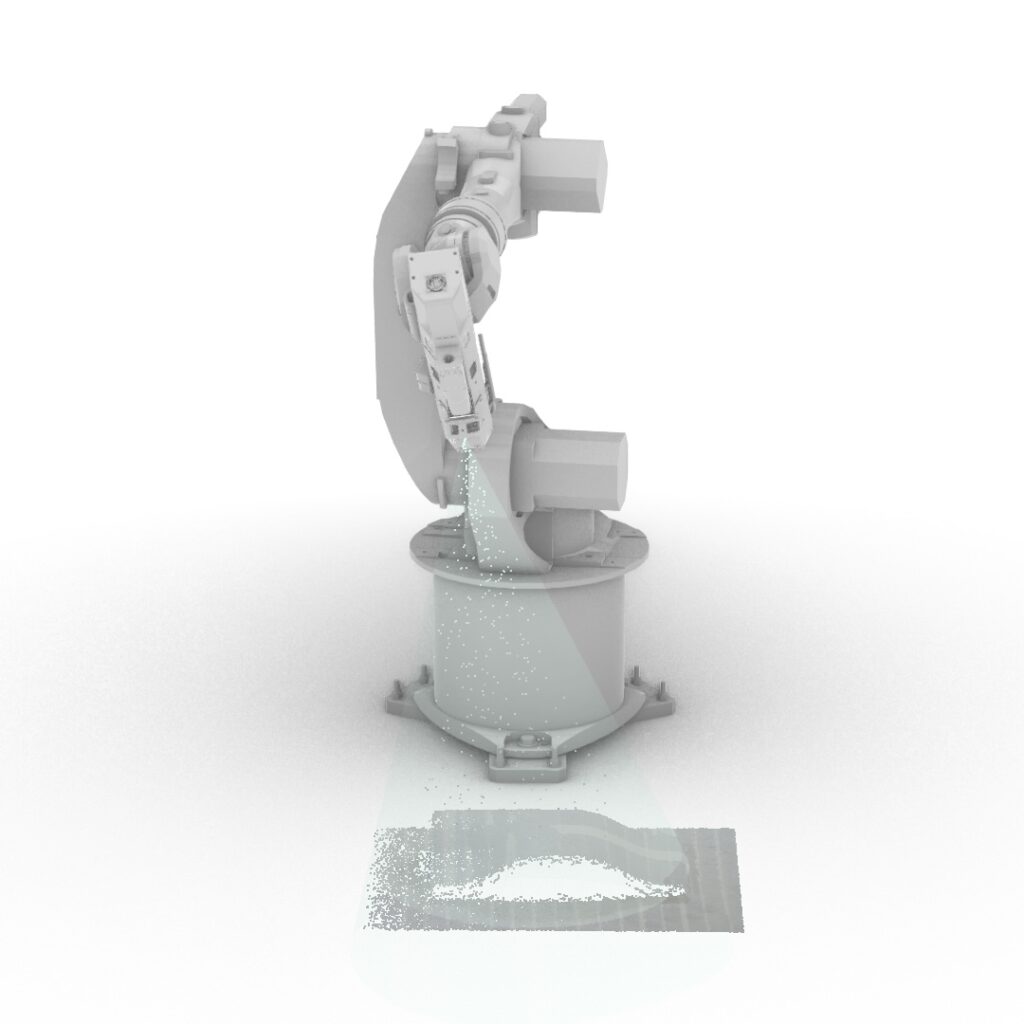
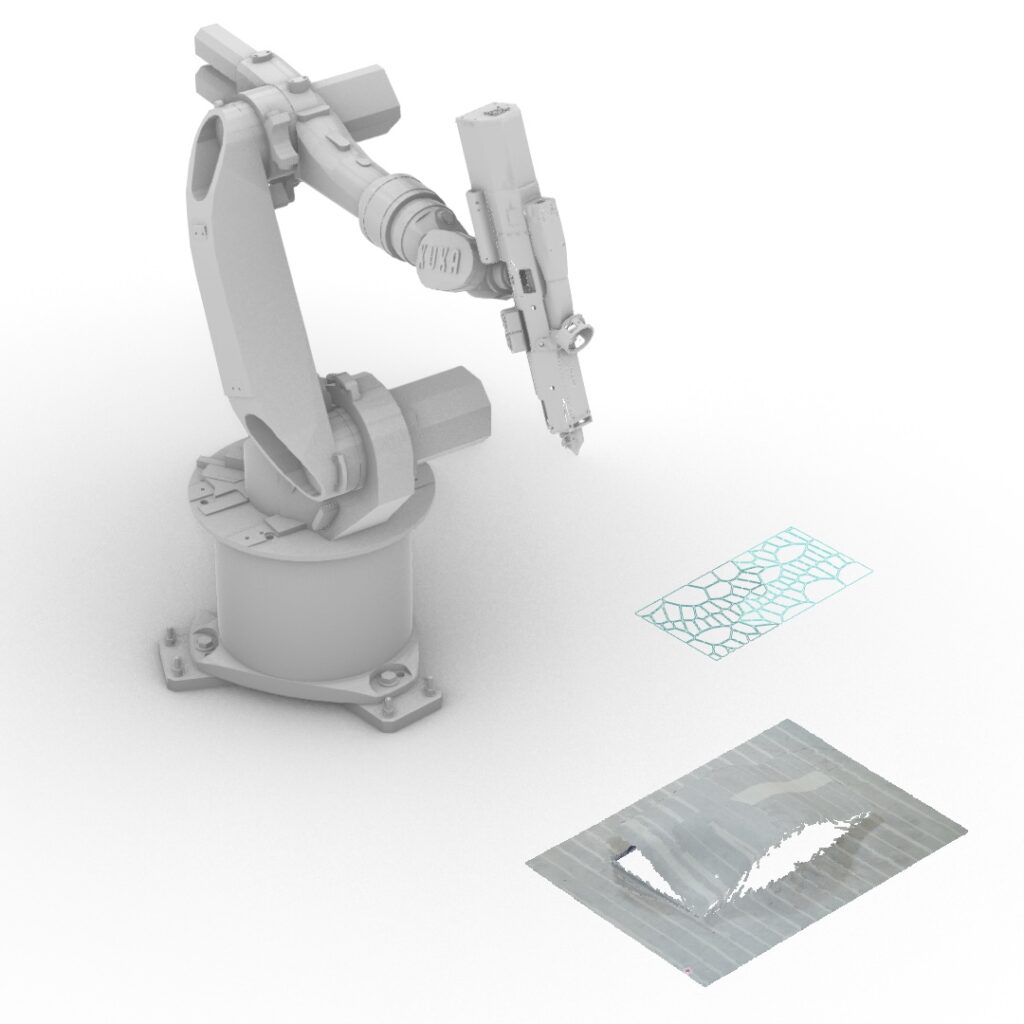
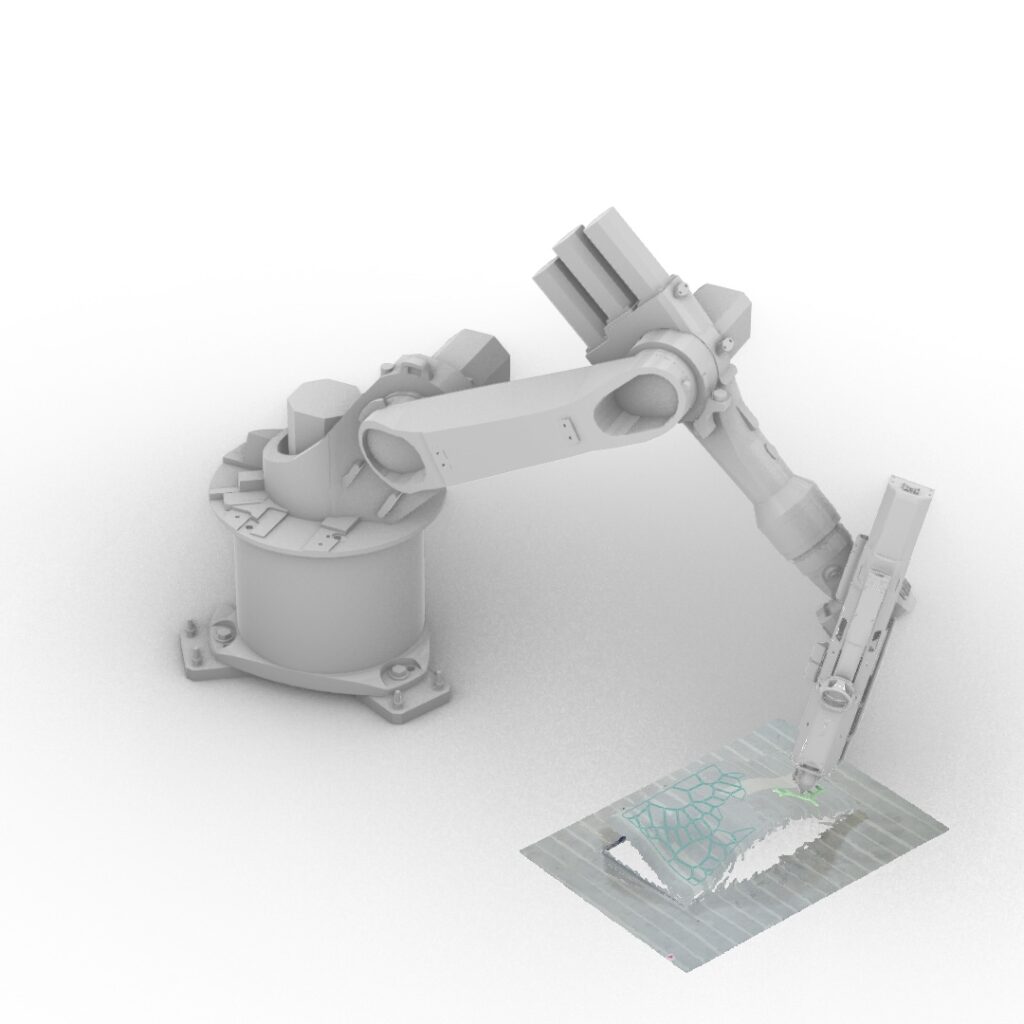
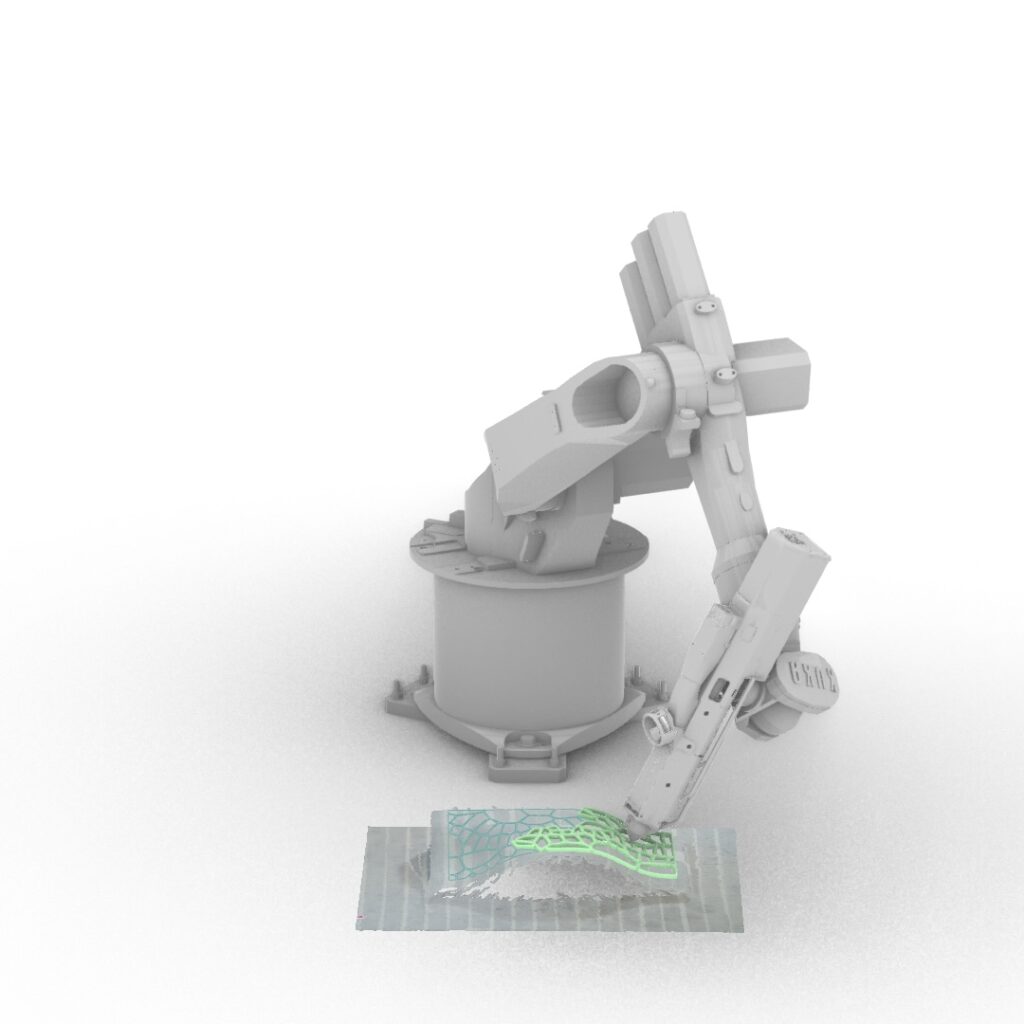
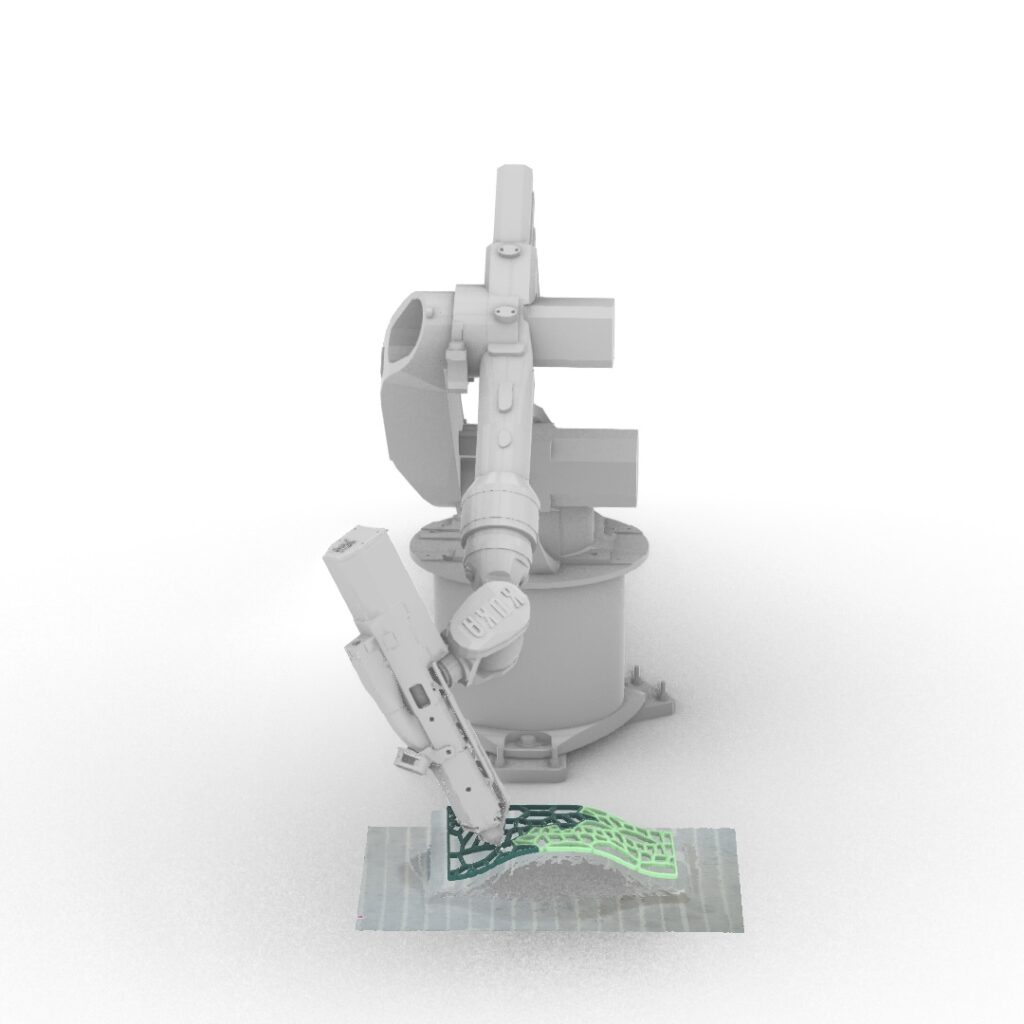
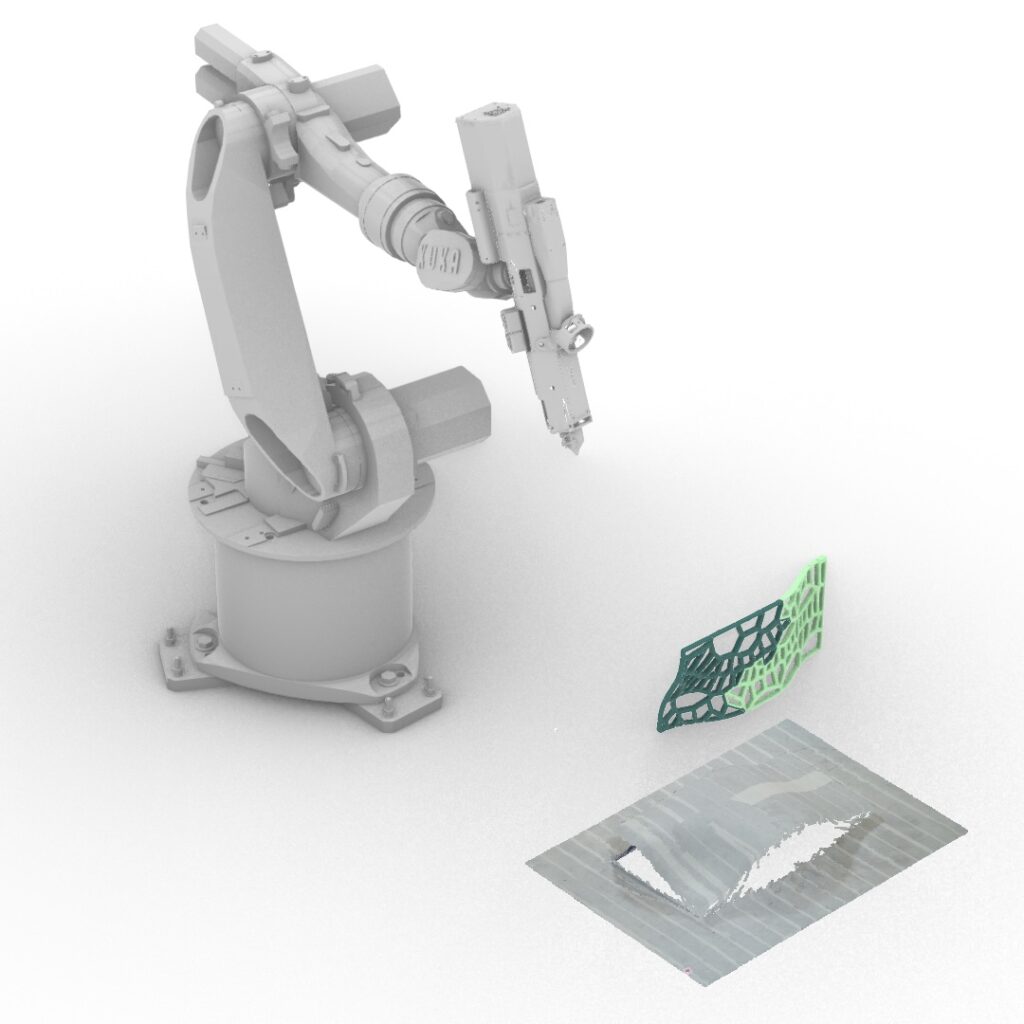
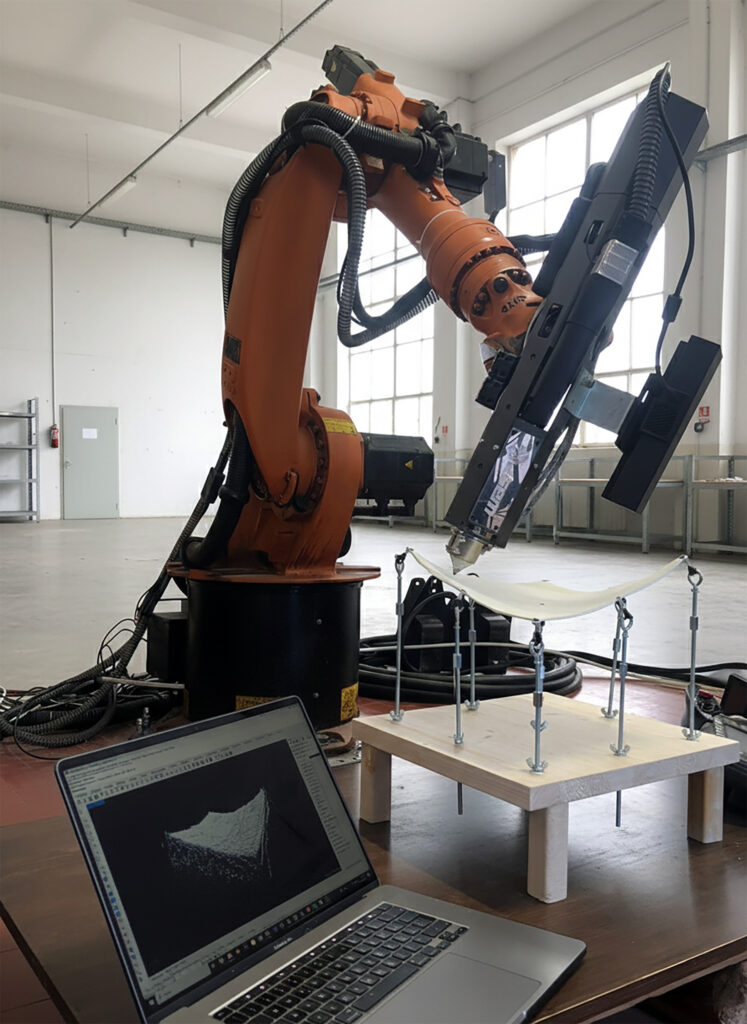
The core of the workshop is based on the implementation of 3D printing processes with the introduction of a double-curved configurable mold as a base geometry, and by the use of an entry level scanner to acquire spatial data. The whole workflow allows to bridge the gap between digital and physical realm, enabling the participants to design and produce components directly on the reconfigurable mold. This interaction opens up for multiple applications for the deposition process, becoming a catalyst for endless geometrical possibilities together with the toolpath, detangling the dependency between form and path: by scanning the design environment, the digital design reconfigures and adapts to local conditions while guaranteeing the global design intention.
Through the act of printing directly onto the mold, participants will develop an intuitive and technical understanding of how material behavior, spatial data, geometry, and toolpath strategy interact to produce complex outcomes for the design and architectural sector.
The workshop is open to students, researchers, architects and designers who want to explore innovative and alternative design and fabrication methods, blending two processes in a continuous workflow. The participants will be exposed to a new design language, as well as to the complex topic of double curved geometries. Any level is welcome – previous experiences with Grasshopper preferred, but not mandatory. Required Rhino 8 installed (90 days free version available).
Workshop structure:
The participants will start the design phase from a global geometry, presenting different curved deformations, which can resemble many architectural elements, such as space dividers, interior claddings, etc. In order to produce the chosen outcome, the geometry will be split and each group of participants will pick one or more portions, paired with their relative mold configuration.
After every mold variation there will be a scanning phase, which will capture 3D data and translate them into the Rhinoceros environment, in order to create a digital twin of the physical setup. Each design iteration will be printed onto the related mold configuration with the toolpath generation managed in Grasshopper, including the scanned point cloud error check and the printing simulation.
At the end of all the stages, all the 3D printed elements will be able to communicate through their shared curvature and tangency, creating a coherent spatial language from multiple individual interventions.

Workshop Takeaways
- Computational workflow: learning a continuous process from design to production, evaluating decision making through digital analysis.
- Programming for robotic fabrication: learning and understanding 6 axis additive manufacturing processes, from theory to practice and opportunities.
- Advanced toolpath design for conformal printing: exploring how tool orientation, curvature alignment, and path logic can actively shape structural and spatial outcomes. Understanding how conformal deposition can follow and enhance complex surfaces, turning the toolpath into a generative design instrument.
- 3D Scanning logic: reading and understanding the spatial data from the scanning process and how to match them with the model geometrical data
- Collaborative assembly and application: Understanding how individual geometries can shape global architectural interventions. Using computational logic and robotic fabrication in order to engineer the connection to prepare and ease the assembly.
Expected Outcomes
- Series of design iterations run and saved in Grasshopper and Rhinoceros
- Singular printed double-curved geometries
- Global assembled double-curved geometries
- Point cloud analysis for errors calibration between physical and digital
Eugenio Bettucchi
Eugenio Bettucchi is a civil engineer with a degree in Building Engineering & Architecture from Alma Mater Studiorum, University of Bologna IT. He developed his thesis focusing on robotic material deposition based on real-time feedback. He is now consulting for several firm and companies in the field of additive manufacturing and robotics. He is also founder of Colla.works, a design to production studio based in Bologna.
He has been head of design and project manager at LaMaquina, large scale 3d printing company, for the last 8 years. Eugenio interests and skills lie in computational design and digital fabrication. He formed part of the IaaC faculty in MRAC (master in Robotic and Advanced Construction) and MaCT. He has been involved in the 3DPA master and in the ROMI project Robotics for Micro Farming, contributing to the development of autonomous ground and aerial solutions.
Profile Links: linkedin.com/in/eugenio-bettucchi
Instagram: @eugeniobettucchi

Francesco Polvi
Architect, computational designer, and researcher. He graduated with honors from the University of Trieste and from the Institute for Advanced Architecture of Catalonia (IAAC), where he later served as Faculty Assistant in computational design and robotic fabrication, collaborating in multiple award-winning projects with the AAG Group.
Francesco is currently Lead Computational Designer at WOOD-SKIN, an engineering and product design studio operating across architecture, art, and design. His work focuses on software-driven DfMA processes, applied to robotic and digital fabrication workflows that bridge the gap between complex designs and manufacturing feasibility. Previously, he worked at LaMáquina for four years as Head of Robotic Manufacturing and Computational Designer, where he designed, managed and engineered large-scale 3D-printed projects.
LinkedIn: https://www.linkedin.com/in/francesco-polvi/
Instagram: @_fffrancesco